
We Try to Break Into Your Business – So No One Else Can
Penetration testing is the only way to know if your defences actually hold. Our in-house team attacks your systems using the same techniques real threat actors use — and tells you exactly what they found.
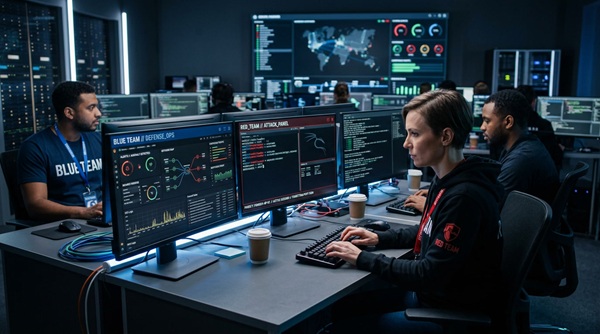
AUSCI – CYBER SECURITY PENETRATION SPECIALISTS
Why a Vulnerability Scan Isn’t Enough
Automated scanners catch known CVEs and misconfigurations against a checklist. They don’t chain vulnerabilities together, they don’t test whether your staff will click a phishing link, and they don’t attempt to move laterally once they’ve found a foothold. Real attackers do all of those things.
A penetration test by a skilled human finds what scanners miss — and proves whether your controls actually hold under pressure, not just in theory.
Our Penetration Testing Services
How a Penetration Test Works
Step 1 — Rules of Engagement
We define scope, objectives, timing, and constraints before anything starts. What’s in scope (IP ranges, applications, domains, people). What’s out of scope. How we handle live findings. Emergency contact protocols. Nothing starts until this is agreed in writing.
Step 2 — Reconnaissance
We gather as much intelligence as possible from public sources before touching your systems — OSINT, exposed credentials, infrastructure enumeration, employee profiles. The same work a real attacker would do.
Step 3 — Active Testing
We attempt to exploit vulnerabilities using real attack techniques: network exploitation, web application attacks, credential attacks, phishing campaigns (where in scope). We document everything — attempted and successful — as we go.
Step 4 — Post-Exploitation (Where Applicable)
Where we achieve initial access, we attempt to move laterally, escalate privileges, and access sensitive data — to demonstrate the real-world impact of a successful breach, not just that entry was possible.
Step 5 — Reporting
You receive a full penetration test report: executive summary (what we found, what it means for your business), technical findings (every vulnerability, evidence, CVSS score), and a prioritised remediation list. Written for both leadership and your engineering team.
Step 6 — Debrief & Remediation Support
We walk through findings with your team. We’re available to answer technical questions during your remediation process, and can retest specific findings once fixed.
- Full penetration test report (executive + technical sections)
- Evidenced findings with screenshots and reproduction steps
- CVSS severity ratings for each vulnerability
- Prioritised remediation list
- Executive summary (business impact focused)
- Debrief session with your team
- Remediation support during the fix phase
- Optional: retest to verify fixes once remediated
Choose Your Scope
Grey Box
White Box
We begin with no knowledge of your internal environment — simulating an external attacker with no insider access. Maximum realism. Slower and broader in scope. Best for: testing your external perimeter and how much damage an unknown attacker can do.
We begin with limited knowledge — perhaps a standard user account or basic network documentation. Simulates a malicious insider or an attacker who has phished credentials. Best for: testing internal controls and lateral movement risk.
We begin with full knowledge — architecture diagrams, credentials, source code access where relevant. More efficient, more comprehensive coverage. Best for: thorough testing of specific applications or systems where maximum coverage matters more than realism.
Know Your Exposure Before Someone Else Does
Not sure where to start? Our free online security audit at audit.ausci.au gives you a directional view of your security posture. When you’re ready for the real thing, our team is here.